Projection domes are having a moment. Festival organizers want them. Venue operators are speccing them. Brands are renting them for activations. And a noticeable fraction of these installations, specifically the ones built for live music, are going to underperform, because the people buying them didn't think through the difference between a cinematic dome and a performance dome.
These are two different products. Building the wrong one for the wrong use case is expensive.
What a closed dome is for
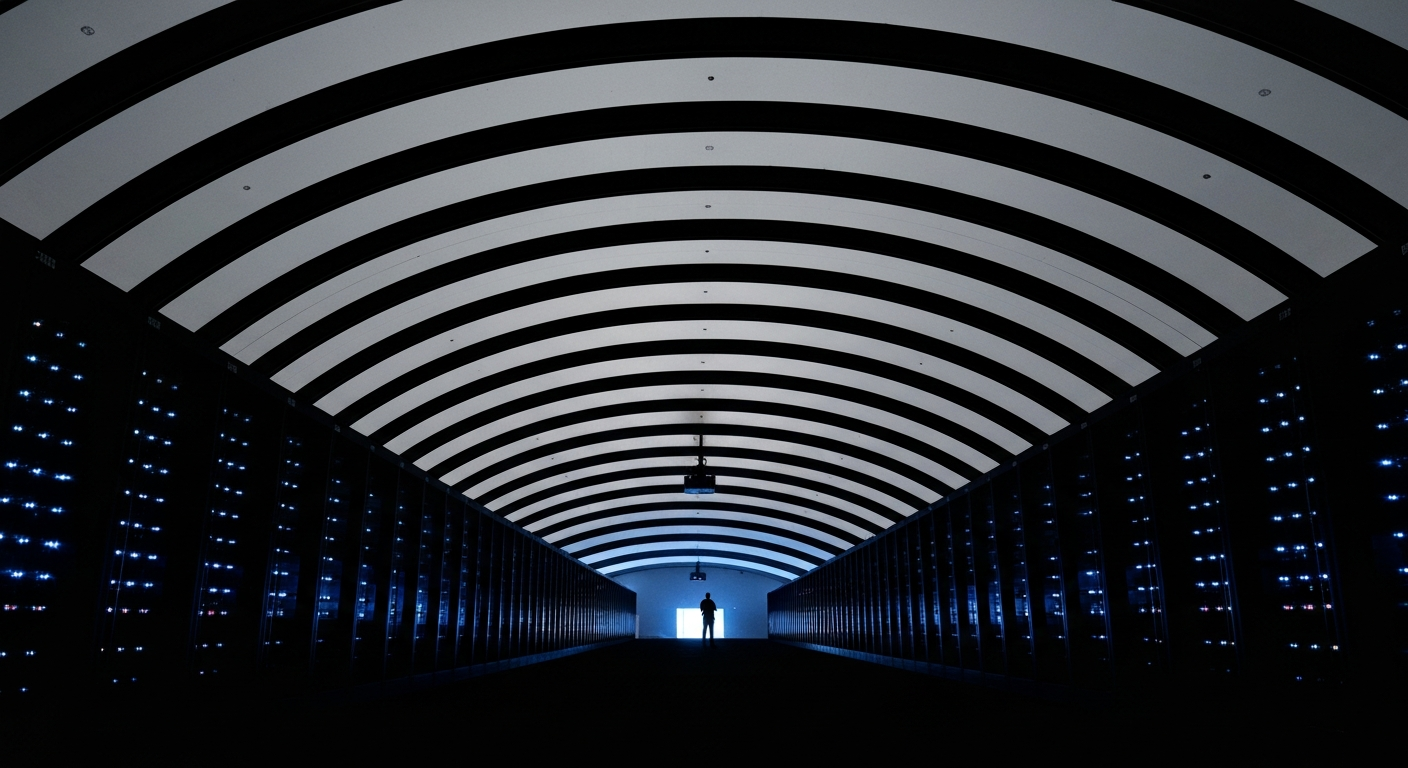
A closed dome - a fully enclosed hemispherical or spherical shell with a light-lock entrance - does one thing beautifully. It removes every visual reference to the outside world. Audience members walk in, the door seals, the lights drop, and they are inside a 360-degree canvas with no visual escape. Planetariums work this way. Immersive art experiences work this way. Cinematic festival installations work this way. The enclosure is the magic.
For a cinematic show - pre-rendered fulldome content, ambient audio, a 20-to-40-minute program - a closed dome is the right answer. The audience is lying down or sitting, looking up, consuming the content the way they'd consume a movie, but wrapped in it instead of in front of it.
Why closed domes fail as concert venues
A band wants to see the audience. The audience wants to see the band. Neither of those is possible inside a closed dome without mutilating the surface. You can try to solve it three ways, all of which fail:
- Put the performers up against the wrap-around surface. Now the performers are lit by projection and the audience can't see them against the background. The band gets eaten by the content.
- Raise the performers on a platform inside. The front row can see them; nobody past the front row can. The back of the dome might as well be watching audio.
- Cut windows into the surface for sightlines. Now the visual wrap is broken, the blend zones are a mess, and the expensive part of the dome isn't working anymore.
The underlying problem is that a concert is a three-party relationship - band, audience, visuals - and a closed dome treats visuals as the whole room. That works for a cinematic piece and doesn't work for a show with performers who need to be seen.
What an open-face dome actually solves
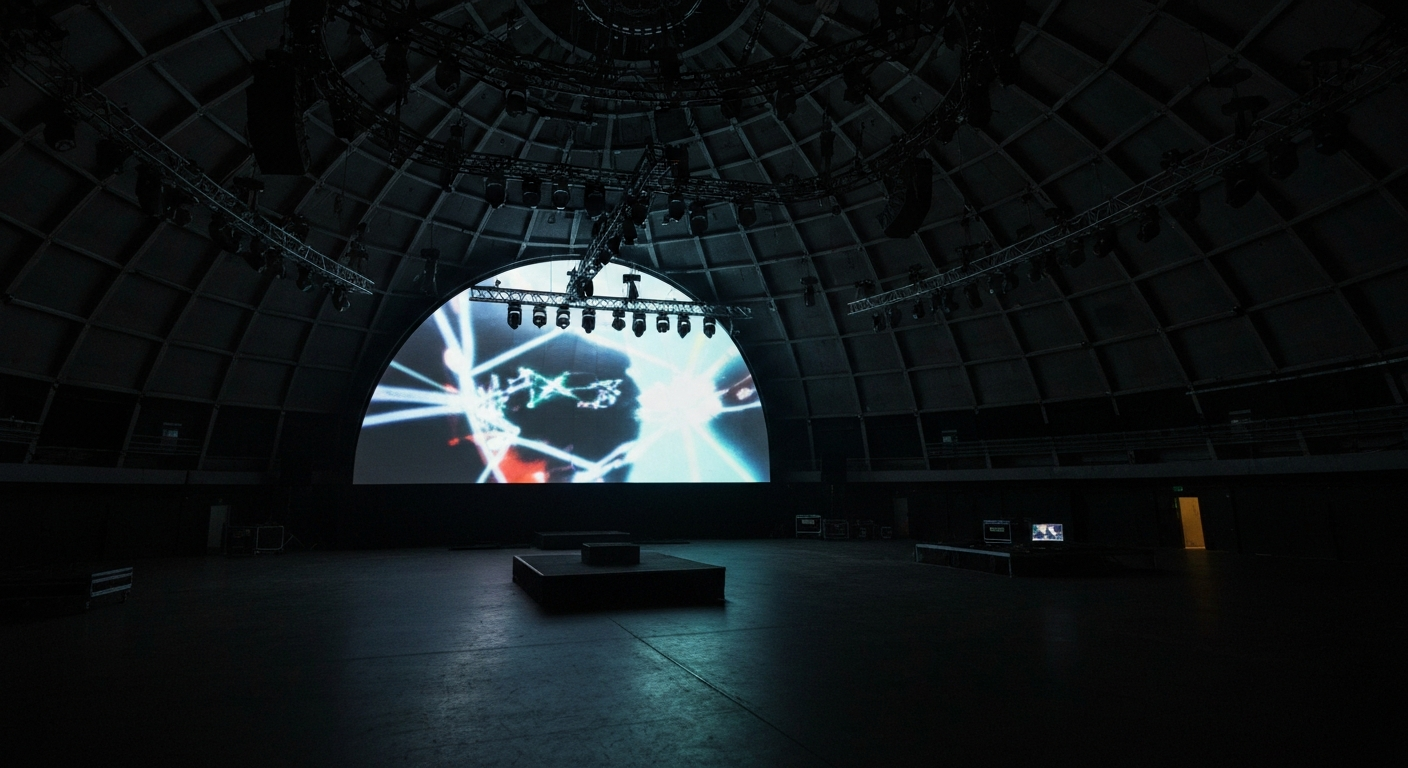
An open-face dome is a hemisphere with the front chord removed. The back and top are curved projection surface; the front is open to the audience. Performers stand inside the open face, facing out. Audience stands or sits in front, looking at the performers silhouetted against a wrap-around projected backdrop.
This is a fundamentally different piece of stagecraft than a closed dome. It reads as a giant, curved, animated backdrop behind a live band - which is exactly what a concert actually wants. The curvature eats the flat horizon line that a rectangular backdrop would have, so the stage reads as bigger than the same band on a flat screen. And because the front is open, the sightlines are unobstructed in both directions.
The right question isn't "closed or open?" It's "is this dome hosting a film or hosting a band?" Pick the dome that matches the show you're actually putting in it.
What to ask if you're buying or booking
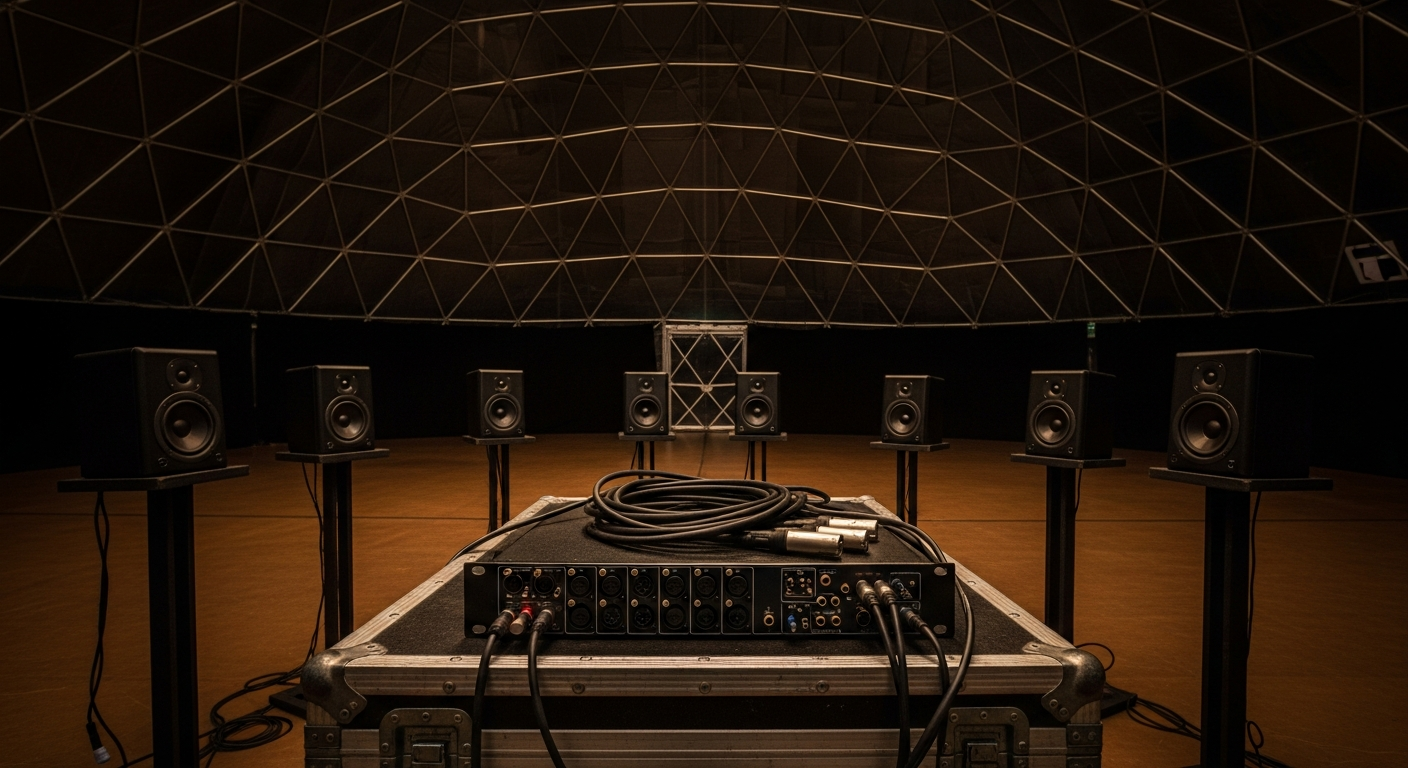
Ask about the audio design at the same time. A dome shell is a concave reflector, so the room's acoustics fight you in ways a rectangular venue doesn't, and the answer is a speaker layout planned alongside the projection rather than bolted on at load-in. We break that down in spatial audio for immersive spaces.
If you're speccing a dome for a venue or renting one for an event: define the primary use case first. Closed domes are a specialty product for cinematic immersion, gallery-style installations, and seated audiovisual programming. Open-face domes are concert-stage instruments. Trying to use one for the other's job is how festival installations end up with frustrated bands, frustrated audiences, and a dome that nobody wants to book next year.